Authors Need to Eat, Too
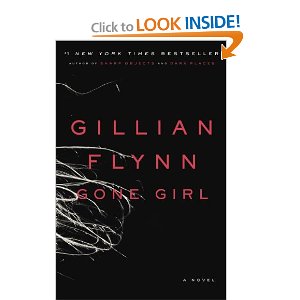
"Gone Girl," by Gillian Flynn
Like many people in our Living Large community, I enjoy nothing better than a good book.
Today, that typically means a good book on my Kindle Fire, which I love, BTW.
It was my turn to choose a book for my book club and having read the reviews for “Gone Girl,” a new novel by Gillian Flynn, I went against the grain of our typical book club fare and announced it for my pick.
It goes against the grain of our typical book club read because it is a new release and those are hard to come by at the library around here.
Although contemporary and a good read, which has already been optioned into a movie by 20th Century Fox to be produced by Reese Witherspoon, some of the ladies in my book club still showed resistance.
“Are you sure we’re going to be able to find this?” One woman asked during our meeting last week.
Ironically, “Gone Girl” is set around the marriage of two writers, both of whom lost their print magazine jobs during the crash of 2008 that sent the publishing industry and nearly everyone connected to it into its own personal recession.
My own freelance writing business, which relied heavily on print magazines and newspapers at the time, was sent into a tailspin and I was left scrambling to reinvent my business for web writing, or risk losing it. By then, I had my business for a decade. This was not an option, since working from anywhere is partly what enabled us to move to Our Little House in the first place.
Dale also lost his job in 2008 and another in 2010, which made for some interesting times for us over the course of 18 months.
In the book, we watch as the financial strain causes the protagonist’s marriage to unravel. The wife goes missing and the husband is suspected in her disappearance (ala Dateline, which the author refers to in her prose, isn’t it always the husband on those episodes of Dateline?). The book’s author, a New York based magazine writer who was laid off in 2008, nails the industry’s plight well. It is an excellent psychological thriller that had me glued to the very end.
I find the book’s subject ironic because many of the women in my book club don’t buy new books. That’s why we typically read older books, the ones they can find at our library (when they chose the book I wrote to read one month, I supplied the free copy for everyone to read and only one woman asked to purchase a copy). I find it ironic too, since one of the others in the group who admits she is “too cheap” to buy a book was once a working writer.
I don’t blame people for wanting to save money – although money doesn’t seem a major concern for many, if any, in this group – I too will check out books from my library and I will also purchase older books used.
But I also understand how this business works for most writers. We slave away for months on book proposals and manuscripts (as I am doing right now) without seeing a dime of income until the book sells, it is published and the book starts registering sales.
Even when that happens, we are lucky if we make 20 percent of the sale of each book and very, very lucky if we sell 5,000 copies, about enough to earn what the federal government describes as “low income” for an annual salary. Most books don’t even earn that.
In the meantime, our bills still come due each month and we have to juggle our time between paying assignments and writing our books. A good friend of ours recently asked how my own book manuscript is coming (due October 15) and I replied, “Slow.” He asked if writer’s block was the problem and I told him the real problem is juggling the paying work with the book writing.
When we commit to a book manuscript, what most writers who haven’t made it into the best-selling-movie-deal-category yet are committing to is giving up our leisure time during those months, as our work time has to continue to be devoted to our day job, the paying stuff.
In essence, it is a second job.
I read an interview with Gillian Flynn, who was no different. She wrote both of her first two novels while she worked her day job at the magazine.
I know many people either don’t know how the publishing business works for authors or they don’t stop to think about it.
So, when the woman from book club asked if we were going to be able to find the book to read at the library (i.e. for free), I got out, “I don’t know, I paid for it and downloaded it on my Kindle…” but I’m glad it was before I could add the snarky, “…..helping the author actually make a living for entertaining me.” I was interrupted by another woman who verified that she indeed did find it at the library, but that everyone (presumably the other dozen or so members) would have to hurry and read it before it was due back because there was a waiting list.
Gillian Flynn finally has “made it.” She scored enough sales on her first two books to get the publisher to give her a contract on the third, which finally landed her that coveted spot of having a movie made from the book, typically where the big money is. She probably won’t have to work nights and weekends again writing her 4th or even 5th, 6th or 7th books while she holds down a day job, but that’s only because enough people were willing to pay her for her talent on the first three.
Do you check out books, buy new books, used books or never buy them at all?


I cannot return a book on time to save my life. I donate generosly to the library through my late fines, so I try not to go. (My poor kids.) We’re overflowing with books at home, and buy heavily for the Kindles now as well as on half.com when that’s a cheaper option. I do think of the author (who’s not getting a cut when I pick up someone’s used copy) regretfully, but when I can find a book for $5 vs. $20 it’s very hard not to prioritize my pocketbook over the author’s. (Sorry, Kerri! Gotta be honest.)
Honesty never hurt anyone, Kim. I see your point, but maybe you can keep in mind the hard work that goes into a book and buy new every once in awhile. 🙂
As an author myself, I struggle with this issue. I can’t afford to buy all of the books I read. I check many out of the library system, but do buy quite a few as well. I find that I buy non-fiction more than fiction. I also tend to buy books that seem a little obscure and borrow the ones that are already having stellar success. Another way I support authors is to buy books as gifts.
That’s a great point, Kris. Books make excellent gifts.
You raise an interesting issue, one that I, also an author, had not pondered. We do spend months writing a book, yet readers don’t value the end result as something that took months to write. Books are becoming more and more devalued. I suppose, at some point, they will lose so much value that fewer and fewer people will write them. Then supply and demand will reverse and the value will go up.
I guess I never thought that the trend would reverse, but that’s econ 101, Alisa.
what could we do with our talents as writers to educate people about the value of writers (and other sorts of artists) — to the economy, to education, to the imagination, to their lives — and the need to respect this value?
A question for the ages, Kerry.
I’m saddened both by the state of the publishing industry and the general economy, where people struggle so that they can’t afford book for themselves and their children.
Very provocative post. Thanks!
Irene
I know, I’ve been tired of this economy since about 2008!
I buy books in eBook form from specific authors I particularly enjoy. Here in NZ, an average paperback costs around $30 and buying for my Kindle is much cheaper. If I’m not an ardent fan, I’ll check books out at the library, but I do want to support the authors I particularly love.
Yowza, and I thought paperbakcs had gotten expensive here!
I too fear for our profession in the long term. I’ve been a lifelong devoted library user and frequent donor (so that they can buy more books). When our local library celebrated its 100th anniversary, they used a quote of mine in promotional materials. They’d asked people to complete this sentence: I love my library because … And, my answer was … because I could never afford to buy all the books I want to read. Truly, for me, it could be a real budgetary issue. Typically, if I’m going to buy a book, I buy it new, which lately means online since there are fewer and fewer bookstores too. Now that I have a Kindle Fire, I’m buying (and reading) more books from both traditional and self publishers, but I’m not sure I get the economics of how that might affect writers since often Kindle versions are less expensive. Some books, for me, are just better as real books (cookbooks, for example). I’ve always been big on sharing books with friends, but that’s harder (and in some cases illegal) to do with a Kindle.
That is an excellent reason to the use the library, Roxanne! I agree, we cannot purchase every book we want to read, but if we don’t purchase any, our profession will die quicker than it already is.
I buy a lot of books, now for my MP3 player more than paper just because I commute on public trans. and sometimes I don’t get a seat so the MP3 is a good deal for me. I believe in supporting authors and music artists (we buy lots of music) for their craft, the joy they give me and to support their art. I prefer to buy a book rather than use the library because I read my books over and over. I wonder people who made homemade crafts for a craft fair would want to give them away or loan them? To be crass, “it’s a job, folks” and aren’t we who are not so creative lucky that there are wonderful authors out there to share their creative genius and deserve to be recognized for such monetarily.
Wow, Carol, you’re renewing my hope for writers everywhere. It isn’t often you find someone who really gets it! Thanks.
I buy most of my books now on the kindle since I have so little room. If it’s an historical book, a cookbook, a how-to book or one by a favorite author and not available on kindle I’ll also buy a paper book. I’m trying to buy some favorite books that are now on kindle to replace the actual book that I purchased a long time ago to save space. I never check books from the library although I love libraries.
Putting your beloved books on the Kindle is a good idea, Sue!
Thank you for your thoughtful post, Kerri!
I am a library junkie to keep down clutter. This happened after many years of book buying. I’ve donated literally thousands of books to libraries.
I wish there were an easy answer to the problem of helping writers earn a good living. I have an Australian friend who told me, if I recall correctly, that writers there earn a royalty when their books are checked out.
Self-publishing might help writers get more control, but then there’s a tremendous job of marketing.
Self publishing is not the answer, believe me. 🙂 Getting something everytime a book is checked out would be awesome, but I imagine a nightmare to keep track of.
I used to buy a lot of books. Then had to give A LOT of books away because I have no room for them (there is very little room for books in a 386 sq ft cabin, after living in an 1800 sq ft house).
I downloaded a lot of free books for my kindle. Buy a few when my wife says she just HAS to read the rest of the series. Then there are a few specialty books that I just have to buy … and occasionally I get a book for my kindle and then just have to buy the hardcopy (My wife was monopolizing my Nook Color so that she could do a certain recipe … so I ordered a hardcopy of the cookbook). sigh.
I’ve found that most of us that live in small homes are also book junkies, for whatever reason. 🙂 That being said, I do not buy as many hard copy books as I once did. But I still have three bookcases full of them in my office and I have to purge them at least once a year (or, practice the one in, one out policy). Most of them are not worth anything monetarily, but maybe sentimentally – some were my mother’s – or because I just love them or have a collection from that particular author. However, to ensure authors stay in the business of putting out those series, we do have to purchase some, or they couldn’t continue to afford to do so. I’m just glad the book publishing industry didn’t make the same mistake with ereaders that the magazine and newspaper industries did for so long, giving away the content for free and actually paying the authors per download.
Since I understood what you explain so well here, I have been buying books more, rather than obtaining them through the local library. Before, I used to borrow books and then, if I loved a book, buy it. I wish more people understood how hard it is to make a living as a writer. They might respect the profession more if they did. Writing is a type of creation. One creates “art” with words, rather than paint or clay. I feel sad that it is so hard for artists to make a living. The world needs artists!
I know we writers lament this over and over, Alexandra. But people wouldn’t think to ask their plumbers, electricians, doctors or lawyers to lend their talents for free. It is very discouraging, but we can’t help it, we are writers. We write. For artists, it is akin to breathing air.
Well, I am one of those people that don’t go to the library. If there’s a book I’m interested in I’ll just buy it. So, for those that support libraries I’m a bad guy. Someone always suffers but I’ve always believed in paying for my entertainment. I’ve never used those illegal video downloading sites for the same reason.
Susan, I definitely think libraries have a place in our society, I believe in libraries (and believe it or not, they do add huge sales to author’s for books but I think we all have to do our part too). Libraries have a role to provide information to those who would not be able to get it otherwise. Like I said, I do utilize my library and used book stores on older books (the shelf life for sales of books is surprisingly short, like within 6 months the publishers stops pushing sales). But without new books being purchased, as you and I do, authors couldn’t afford to continue to inform or entertain. It’s that simple and I see no reason for some to *never* purchase a new book. It isn’t like the group couldn’t have put $2 together each and bought 2 copies!